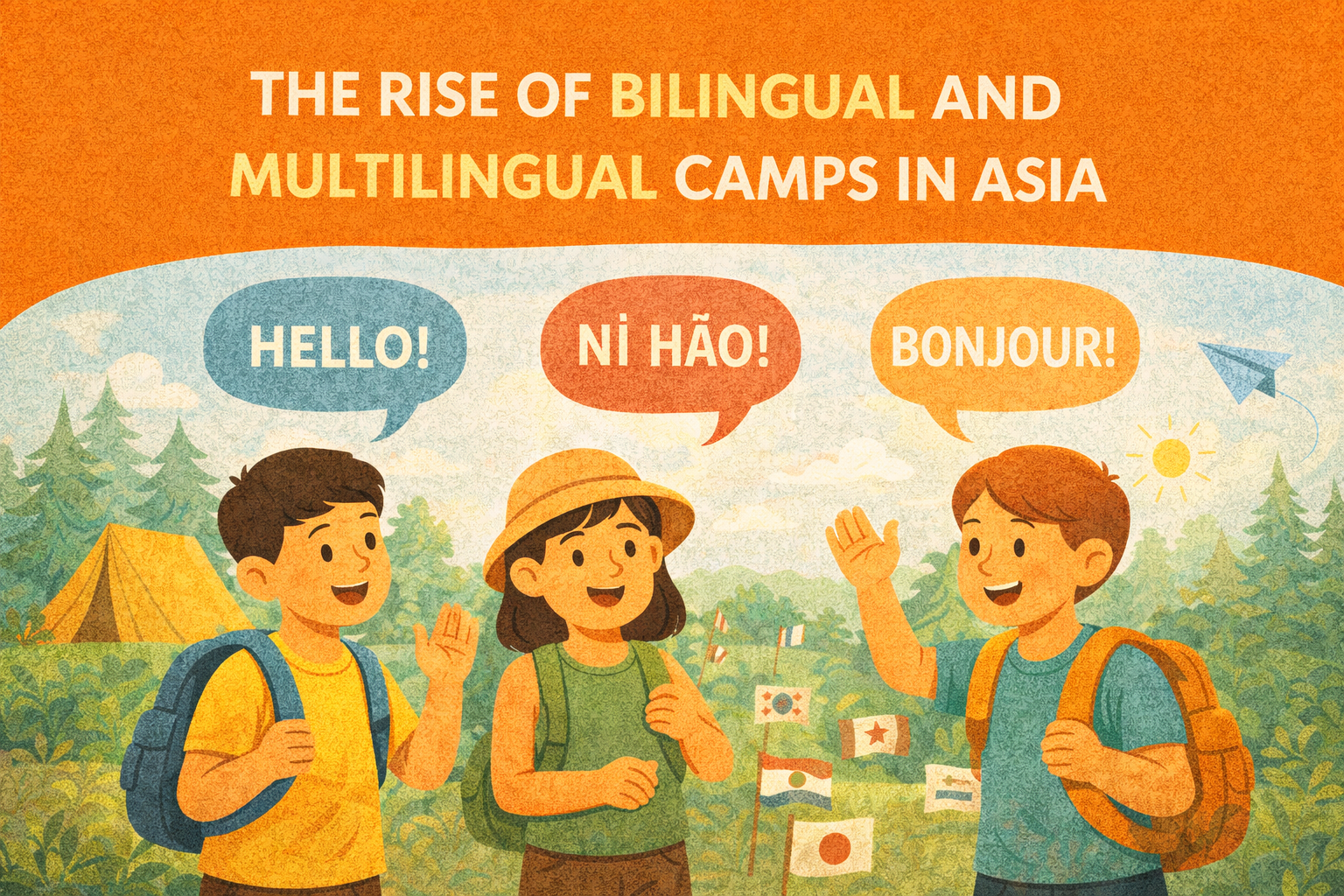
Introduction – When Learning a Language Becomes a Lived Experience
A parent once shared a surprising moment after picking her son up from camp. As they drove home, he casually switched between English and Mandarin while describing his day. She laughed and asked, “When did you get so confident?”
His answer was simple:
“Everyone was speaking both. It felt normal.”
That’s the quiet power behind the growing popularity of bilingual and multilingual camps in Asia.
Across the region, families are increasingly choosing camps where children don’t just study languages—they live them. Instead of textbooks and drills, kids learn through play, friendship, storytelling, and shared experiences. This shift reflects a broader change in how parents view language learning in a globalized world.
In this article, we’ll explore why bilingual and multilingual camps are rising across Asia, what makes them so effective, and how families are using platforms like Camp Finder Asia to discover the right programs.
Why Language Learning Is a Priority for Asian Families
Asia is one of the most linguistically diverse regions in the world. In many countries, children grow up hearing multiple languages daily—at home, in school, and in the community.
Parents increasingly recognize that:
Language skills open academic and career doors
Bilingualism supports cognitive development
Communication across cultures is essential
Confidence in language builds confidence overall
As a result, families are looking for environments where language learning feels natural, social, and practical—not forced.
What Are Bilingual and Multilingual Camps?
Bilingual and multilingual camps are programs where:
Two or more languages are used daily
Activities are conducted in multiple languages
Children are encouraged (not pressured) to communicate across languages
Language learning happens through immersion
Unlike traditional language classes, these camps focus on communication, not perfection.
Children learn by doing—asking for help, playing games, collaborating on projects, and making friends across languages.
Why Camps Are Ideal for Language Immersion
Language immersion works best when learners feel relaxed and motivated. Camps create exactly that environment.
At camp:
There are no exams or grades
Mistakes are normal and accepted
Language is used for real purposes
Peer interaction drives learning
This reduces anxiety and helps children build confidence faster than classroom-based instruction alone.
Parents across the region explore these immersive programs through platforms like Camp Finder Asia:
👉 https://campfinderasia.com/
1. The Global Mindset Driving Multilingual Education
As families become more globally mobile, language skills are no longer optional.
Many parents want children who can:
Communicate across cultures
Adapt to international environments
Feel confident anywhere in the world
Bilingual and multilingual camps support this global mindset by exposing children to diverse languages and cultures early on.
2. Asia’s Unique Multilingual Environment
Asia is uniquely positioned for multilingual learning.
Children may be exposed to:
English as a global language
Local or national languages
Heritage or family languages
Regional languages
Camps in Asia often reflect this reality, blending languages naturally rather than treating them as separate subjects.
3. Learning Languages Through Social Interaction
Language sticks when it’s social.
At camp, children:
Learn phrases from peers
Pick up accents and expressions naturally
Use language to solve problems and make friends
This social context makes learning meaningful—and memorable.
4. Confidence Grows Faster in Camp Settings
One of the biggest barriers to language learning is fear of making mistakes.
Camps remove that fear.
Children quickly realize:
Everyone is learning
Communication matters more than accuracy
Effort is encouraged
As confidence grows, fluency follows.
5. Bilingual Camps Support Cognitive and Emotional Development
Research consistently shows that bilingualism supports:
Cognitive flexibility
Problem-solving
Attention control
Empathy
In camp environments, these benefits are amplified through teamwork, creativity, and emotional connection.
6. Multilingual Camps Encourage Cultural Awareness
Language and culture are deeply connected.
Through multilingual camps, children learn to:
Respect different perspectives
Appreciate cultural traditions
Navigate diverse social settings
These experiences help children develop openness and curiosity—qualities essential in today’s world.
7. Not Just for “Language Kids”
Many parents assume bilingual camps are only for already fluent children. In reality, these camps are designed for mixed ability levels.
Children benefit whether they:
Are beginners
Understand but don’t speak confidently
Are fluent in one language but learning another
The immersive, supportive environment allows everyone to progress at their own pace.
8. Day Camps vs Overnight Camps for Language Learning
Both formats offer strong language exposure—just in different ways.
Day Camps
Ideal for younger children
Gentle daily immersion
Allows practice at home
Overnight Camps
Deeper immersion
Continuous language exposure
Stronger confidence gains
Parents can explore both options on Camp Finder Asia:
👉 https://campfinderasia.com/
9. Why Parents Prefer Camps Over Traditional Language Classes
Traditional language classes often focus on:
Grammar drills
Worksheets
Memorization
Camps focus on:
Communication
Interaction
Real-life use
Many parents find that children return from camp more willing to speak, even if their grammar isn’t perfect—and that’s a huge win.
10. The Role of Trained Educators and Counselors
High-quality bilingual camps rely on:
Multilingual facilitators
Trained educators
Native or fluent speakers
Supportive teaching styles
These professionals create safe spaces where children feel comfortable experimenting with language.
How Camp Finder Asia Helps Families Find Language-Focused Camps
With so many options available, parents need clarity.
Camp Finder Asia helps families:
Discover bilingual and multilingual camps across Asia
Compare programs easily
Understand camp focus and language exposure
Choose programs aligned with family goals
Explore available camps here:
👉 https://campfinderasia.com/
A Real-Life Story – Finding Her Voice in a New Language
When Sofia joined a bilingual camp, she understood English but rarely spoke it. She worried about making mistakes.
By the end of camp, she was leading games in English and translating for friends. Her parents were stunned—not by her vocabulary, but by her confidence.
Camp didn’t just teach her a language. It gave her a voice.
Common Parent Concerns About Multilingual Camps
“Will my child get confused?”
No. Children are remarkably capable of separating languages when exposed naturally.
“What if my child is shy?”
Camps often help shy children open up through play and teamwork.
“Is immersion too intense?”
Good camps balance structure with emotional support, making immersion enjoyable—not overwhelming.
FAQs About Bilingual and Multilingual Camps
1. What age is best for bilingual camps?
Children as young as 5–6 can benefit, depending on readiness.
2. Do children need prior language knowledge?
No. Camps support mixed levels.
3. Are bilingual camps academic?
They focus on communication, not tests.
4. How long does it take to see progress?
Many parents notice confidence gains within days.
5. Are multilingual camps suitable for teens?
Yes. Older children often gain deeper cultural and communication skills.
6. Where can I find bilingual camps in Asia?
Parents often explore options using Camp Finder Asia:
👉 https://campfinderasia.com/
Conclusion – Language Learning That Feels Alive
The rise of bilingual and multilingual camps in Asia reflects a deeper understanding of how children learn best.
When language is woven into daily life—through play, friendship, and shared experience—it becomes natural, meaningful, and lasting.
For families seeking confident communicators and globally minded children, these camps offer far more than language lessons. They offer connection, culture, and confidence.
Explore bilingual and multilingual camp options across Asia at:
👉 https://campfinderasia.com/