Introduction – When Play Becomes a Passport
It started with a simple game.
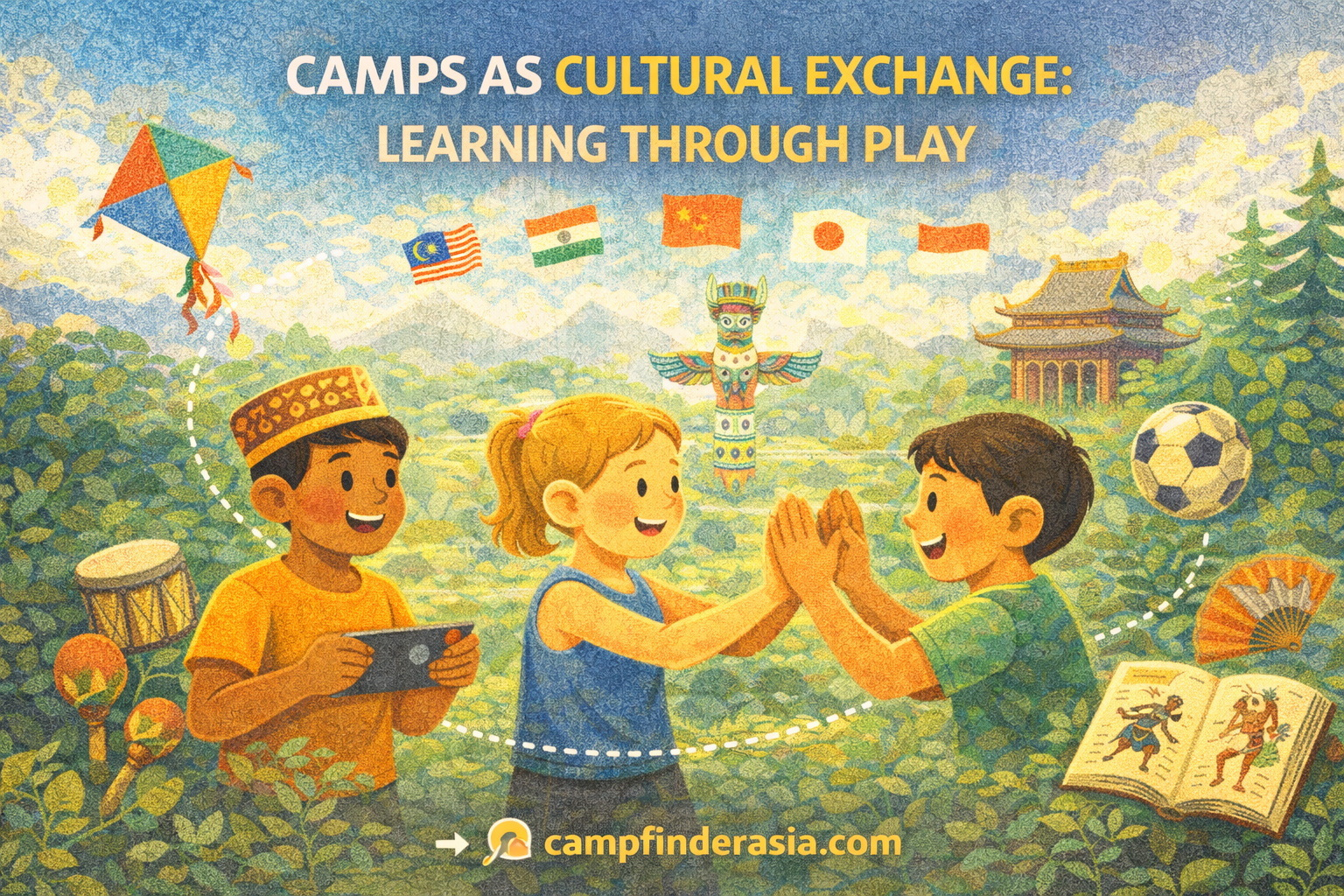
A group of children stood in a circle, laughing as they taught each other a clapping rhythm. One child explained it came from her home country. Another added a song they sang back home. By the end of the activity, the game had changed—blending cultures, languages, and laughter.
No one called it a lesson.
But everyone learned something.
This is the quiet magic of camps as cultural exchange.
In today’s increasingly global world, children are growing up alongside people from many backgrounds—but meaningful cultural understanding doesn’t come from proximity alone. It comes from shared experience. Camps provide exactly that space, where children learn about cultures not through textbooks, but through play, friendship, and everyday moments.
In this article, we’ll explore how camps function as powerful cultural exchange environments, why play is such an effective teacher, and how parents can find these enriching experiences through platforms like Camp Finder Asia.
What Is Cultural Exchange for Children?
Cultural exchange isn’t about memorizing facts about other countries.
For children, it means:
Playing with someone different from them
Hearing new languages naturally
Sharing traditions, games, and stories
Learning to respect different ways of life
The most meaningful cultural exchange happens when children feel safe, equal, and curious—and camps are designed exactly for that.
Why Play Is the Perfect Tool for Cultural Learning
Children learn best through play.
Play:
Lowers barriers
Encourages communication
Reduces fear of mistakes
Creates shared joy
When children play together, differences fade into the background. Curiosity takes over. This is why learning through play is such a powerful foundation for cultural exchange.
Why Camps Are Ideal Spaces for Cultural Exchange
Camps create environments where:
Children spend extended time together
Activities are collaborative
Hierarchies are minimal
Interaction is constant and natural
Unlike classrooms, camps don’t separate children by ability or background. Everyone participates, contributes, and belongs.
Parents across Asia often discover these multicultural camp environments using Camp Finder Asia, which brings together diverse programs from across the region:
👉 https://campfinderasia.com/
1. Camps Bring Children From Different Cultures Together Naturally
One of the most powerful aspects of camp is diversity.
Many camps welcome:
Local children
Expat families
International students
Multilingual campers
This mix creates organic opportunities for cultural exchange—without forcing interaction.
Children connect first as playmates, then as friends.
2. Language Learning Happens Without Pressure
At camp, language isn’t a subject—it’s a tool.
Children:
Pick up words while playing games
Learn phrases through songs and activities
Communicate using gestures and creativity
This natural exposure builds confidence and reduces anxiety around language use.
3. Shared Games Become Shared Culture
Every culture has its games.
At camp, children often:
Teach games from home
Adapt rules together
Combine traditions into something new
These moments help children understand that cultures aren’t static—they’re living, shared, and evolving.
4. Food, Music, and Stories Deepen Cultural Understanding
Camps often incorporate cultural elements such as:
Songs from different countries
Storytelling traditions
Cultural celebrations
Themed activity days
Children experience culture through senses and emotions, making learning memorable and meaningful.
5. Play Builds Empathy Without Lectures
Empathy can’t be taught through rules.
It grows when children:
Work together
Solve problems as a group
Support peers through challenges
Play creates shared emotional experiences, which naturally foster understanding and compassion.
6. Camps Encourage Respect for Differences
Through daily interaction, children learn that:
Different doesn’t mean wrong
Everyone brings something valuable
Respect creates better experiences
These lessons become habits, not instructions.
7. Cultural Exchange Helps Children Understand Themselves Too
Learning about others often leads children to reflect on their own identity.
At camp, children:
Share traditions from home
Explain family customs
Feel proud of their backgrounds
This mutual exchange builds confidence and self-awareness.
8. Asia as a Rich Environment for Cultural Exchange Camps
Asia’s diversity makes it an exceptional region for cultural learning.
Many camps in Asia include children from:
Multiple countries
International schools
Local communities
This creates daily opportunities for cultural exchange that feel authentic and relevant.
Parents can explore these multicultural camps via Camp Finder Asia:
👉 https://campfinderasia.com/
9. Learning Conflict Resolution Across Cultures
Disagreements happen—especially when cultures mix.
Camps teach children how to:
Communicate respectfully
Understand different perspectives
Resolve misunderstandings
These skills are essential for global citizenship and future collaboration.
10. Camps Build Global Friendships
Friendships formed at camp often cross borders.
Children learn that:
Friendship isn’t limited by language
Connection doesn’t require sameness
Differences can strengthen relationships
These friendships shape how children see the world long after camp ends.
Day Camps vs Overnight Camps for Cultural Exchange
Day Camps
Ideal for younger children
Gentle cultural exposure
Daily reflection at home
Overnight Camps
Deeper immersion
Stronger bonds
Greater independence and adaptability
Both formats support cultural exchange in different ways.
Parents can explore both options on Camp Finder Asia:
👉 https://campfinderasia.com/
A Real-Life Story – Learning Culture Through Friendship
At a holiday camp, Maya befriended a camper from another country. They didn’t share a common first language, but they shared games, snacks, and laughter.
By the end of camp, Maya had learned new words, new games, and a new perspective. She didn’t say she learned about another culture—she said she made a friend.
That’s cultural exchange at its best.
How Cultural Exchange at Camp Supports Future Skills
Children who experience cultural exchange through play often develop:
Strong communication skills
Openness to diversity
Adaptability
Empathy
Confidence in global settings
These qualities are essential in today’s interconnected world.
How Camp Finder Asia Helps Families Find Cultural Exchange Camps
Choosing the right camp matters.
Camp Finder Asia helps families:
Discover culturally diverse camps across Asia
Compare program focus and age suitability
Understand camp values and philosophies
Choose environments that support learning through play
Explore cultural exchange camps here:
👉 https://campfinderasia.com/
Common Parent Questions About Cultural Exchange Camps
“Is my child too young for cultural exchange?”
No. Young children naturally absorb cultural understanding through play.
“Will my child feel out of place?”
Well-run camps prioritize inclusion and belonging.
“Do children need language skills beforehand?”
No. Play bridges communication gaps naturally.
FAQs About Camps as Cultural Exchange
1. What age is best for cultural exchange camps?
Children of all ages benefit when programs are age-appropriate.
2. Are these camps academic?
They focus on social and cultural learning, not tests.
3. Can shy children benefit?
Yes. Play-based environments reduce social pressure.
4. How long does it take to see benefits?
Many children show openness and confidence within days.
5. Are cultural exchange camps safe?
Reputable camps prioritize safety and emotional support.
6. Where can parents find cultural exchange camps in Asia?
Parents often use Camp Finder Asia:
👉 https://campfinderasia.com/
Conclusion – Play Is the World’s Most Universal Language
Children don’t need lectures to understand culture.
They need space to play, connect, and explore together.
Camps offer that space—where cultural exchange happens naturally, friendships cross borders, and learning feels joyful. Through play, children develop empathy, curiosity, and respect—qualities that shape them into open-minded global citizens.
In a world that needs more understanding, camps quietly do something powerful: they bring children together and let them learn from one another.
Explore camps that celebrate cultural exchange across Asia at:
👉 https://campfinderasia.com/