
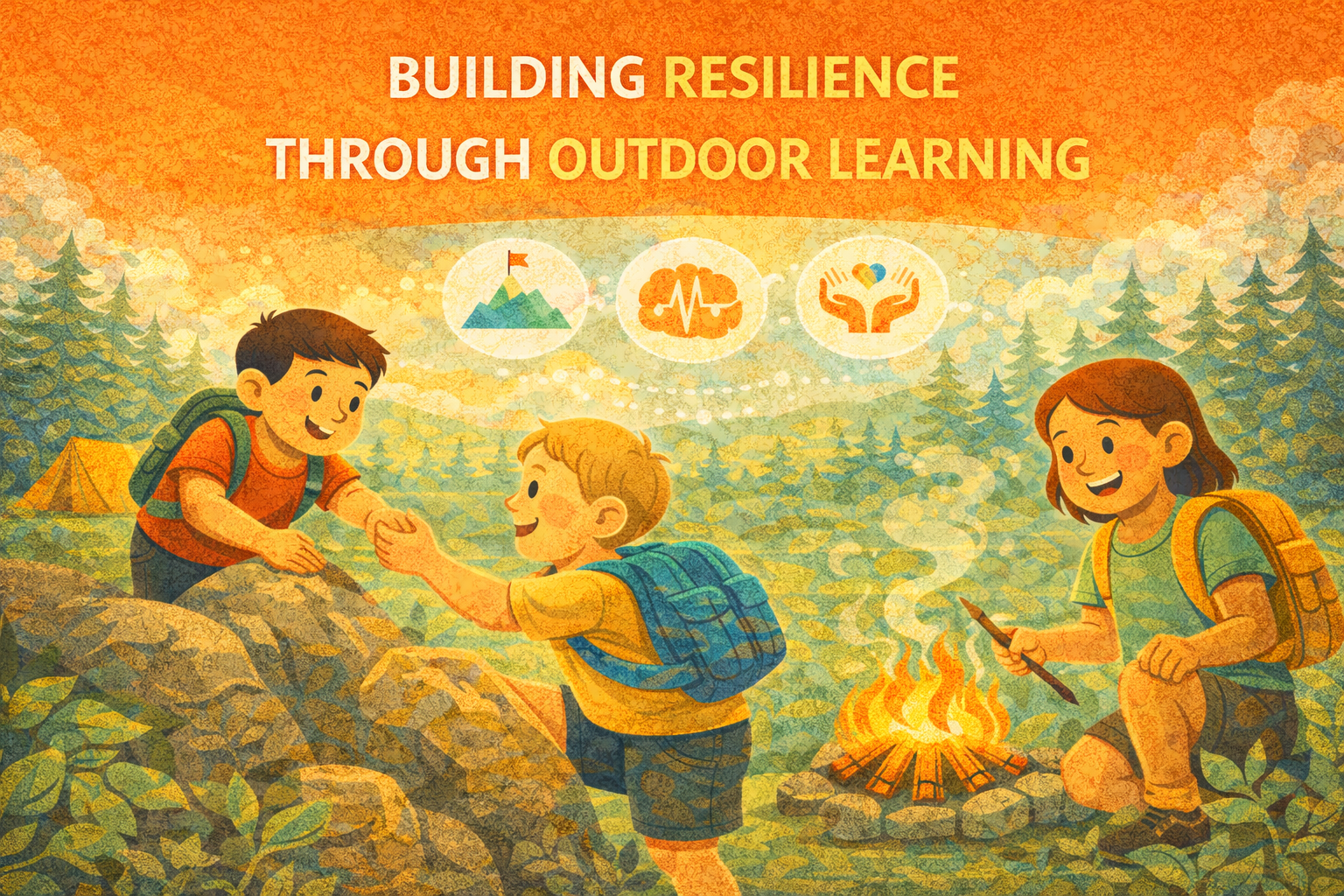
Introduction – Resilience Is Built, Not Taught
It happened during a simple hike.
A child tripped, scraped a knee, and burst into tears. A few minutes later—after some encouragement, laughter from friends, and a deep breath—that same child stood up and said, “I can do it again.”
That moment may seem small. But it’s exactly how resilience is built.
In today’s world, children face pressures from school, screens, schedules, and expectations. Parents want to protect them—but they also want them to grow strong, adaptable, and confident. This balance isn’t always easy.
That’s where outdoor learning plays a powerful role.
Through nature-based challenges, teamwork, and real-world problem-solving, outdoor learning experiences—especially in camps—help children develop resilience in ways classrooms often can’t. In this article, we’ll explore how building resilience through outdoor learning works, why it’s so effective, and how parents can find the right programs using platforms like Camp Finder Asia.
What Is Resilience, and Why Does It Matter?
Resilience is the ability to:
Cope with challenges
Adapt to change
Recover from setbacks
Keep going when things feel hard
Resilient children aren’t immune to stress or disappointment. Instead, they learn how to navigate difficulties with confidence and flexibility.
These skills are essential—not just for childhood, but for life.
Why Resilience Is Hard to Teach Indoors
Resilience can’t be taught through lectures or worksheets.
In traditional learning environments:
Mistakes are often avoided
Outcomes are controlled
Challenges are predictable
While structure is important, it doesn’t always allow children to experience real uncertainty or problem-solving.
Outdoor learning changes that.
Why Outdoor Learning Is So Effective for Building Resilience
Outdoor environments are naturally unpredictable.
Weather changes. Paths are uneven. Plans need adjusting. And children must respond in real time.
This creates ideal conditions for resilience-building because:
Challenges feel real
Effort matters more than perfection
Success comes through persistence
Parents across Asia often explore outdoor-focused camps that emphasize resilience and growth using Camp Finder Asia:
👉 https://campfinderasia.com/
1. Outdoor Challenges Teach Children to Persevere
Outdoor learning involves physical and mental challenges.
Examples include:
Hiking uneven terrain
Completing obstacle courses
Building shelters
Navigating group challenges
Children quickly learn that progress often comes step by step. They may struggle at first—but with effort and support, they succeed.
Each success reinforces the belief: “I can handle hard things.”
2. Nature Teaches Adaptability
Unlike indoor environments, nature doesn’t follow strict schedules.
Outdoor learning teaches children to:
Adapt plans when weather changes
Adjust expectations
Stay flexible when conditions aren’t perfect
These moments help children understand that setbacks aren’t failures—they’re part of the process.
3. Safe Failure Builds Confidence
Outdoor learning encourages trial and error.
Children may:
Build something that collapses
Choose a path that doesn’t work
Make decisions that need revising
In supportive outdoor programs, failure isn’t punished—it’s reframed as learning. This builds resilience far more effectively than avoiding mistakes altogether.
4. Physical Activity Strengthens Mental Resilience
There’s a strong link between physical effort and emotional strength.
Outdoor learning promotes:
Movement
Endurance
Body awareness
When children push through physical challenges, they develop mental toughness alongside physical confidence.
5. Teamwork Teaches Emotional Resilience
Many outdoor learning activities are group-based.
Children learn to:
Communicate under pressure
Support peers
Handle disagreements
Accept different roles
Working through challenges together builds empathy, patience, and emotional resilience.
6. Nature Calms the Nervous System
Nature has a grounding effect.
Outdoor learning environments help:
Reduce stress
Improve emotional regulation
Increase focus and patience
Children who feel calmer are better able to cope with challenges—and bounce back from them.
7. Independence Grows Naturally Outdoors
Outdoor learning encourages children to take responsibility.
They may need to:
Manage equipment
Make decisions
Monitor their own comfort levels
This independence builds confidence and self-trust—key components of resilience.
8. Outdoor Learning Builds Problem-Solving Skills
Outdoor challenges rarely have one “right” answer.
Children must:
Observe
Experiment
Collaborate
Adjust strategies
This type of thinking helps children approach problems creatively rather than giving up when things don’t go as planned.
9. Experiencing Discomfort (Safely) Builds Strength
Resilience grows when children experience manageable discomfort.
Outdoor learning may involve:
Getting muddy
Feeling tired
Being outside in changing weather
When supported properly, these experiences teach children that discomfort is temporary—and survivable.
10. Confidence Comes From Real Achievement
Outdoor learning achievements feel earned.
When a child:
Reaches the top of a hill
Completes a challenge
Helps a teammate succeed
That confidence is deeply rooted. It comes from effort, not praise alone.
Outdoor Learning in Camps: A Natural Fit
Camps are ideal environments for outdoor learning.
They offer:
Structured challenges
Trained facilitators
Peer support
Safe risk-taking
Parents often look for camps that emphasize outdoor learning and resilience-building through Camp Finder Asia, which features programs across Asia designed for different age groups and comfort levels:
👉 https://campfinderasia.com/
Day Camps vs Overnight Camps for Building Resilience
Day Camps
Ideal for younger children
Gentle introduction to outdoor challenges
Daily reflection and recovery at home
Overnight Camps
Deeper immersion
Greater independence
Stronger resilience gains
Both formats support resilience in age-appropriate ways.
A Real-Life Story – Resilience in Action
During an outdoor camp, eight-year-old Amir struggled to climb a small rock wall. He tried once, slipped, and wanted to stop.
With encouragement, he tried again. And again.
When he finally reached the top, he didn’t celebrate the height—he celebrated the effort.
Later, his parents noticed something changed. Amir didn’t avoid challenges at school as much. He had learned that persistence works.
Why Outdoor Learning Complements Academic Education
Resilience supports learning.
Children who develop resilience through outdoor learning often:
Handle academic pressure better
Persist through difficult tasks
Approach challenges with confidence
Outdoor learning doesn’t replace academics—it strengthens a child’s ability to succeed within them.
How Camp Finder Asia Helps Families Find Resilience-Focused Camps
Choosing the right outdoor program matters.
Camp Finder Asia helps families:
Discover outdoor learning camps across Asia
Compare program focus and age suitability
Understand camp philosophies and environments
Choose experiences that prioritize resilience and safety
Explore outdoor learning camps here:
👉 https://campfinderasia.com/
Common Parent Concerns About Outdoor Learning
“Is it safe?”
Yes—when programs are well-designed with trained supervision.
“What if my child struggles?”
Struggle is part of growth. Supportive environments help children overcome it.
“What if my child prefers indoor activities?”
Many children discover a love for outdoor learning once they try it.
FAQs About Building Resilience Through Outdoor Learning
1. What age is best for outdoor learning?
Children of all ages benefit when activities are age-appropriate.
2. Do children need to be athletic?
No. Outdoor learning focuses on effort, not ability.
3. How does outdoor learning affect confidence?
It builds confidence through real achievement and persistence.
4. Are outdoor camps suitable for shy children?
Yes. Nature-based activities often reduce social pressure.
5. How long does it take to see benefits?
Many parents notice changes after just one program.
6. Where can parents find outdoor learning camps in Asia?
Parents often explore options using Camp Finder Asia:
👉 https://campfinderasia.com/
Conclusion – Resilience Grows Where Children Are Allowed to Try
Resilience isn’t built by avoiding challenges—it’s built by facing them with support.
Outdoor learning gives children the space to try, fail, adapt, and succeed. Through nature, teamwork, and real-world challenges, children develop the resilience they’ll carry into school, relationships, and adulthood.
For parents seeking confident, capable, and emotionally strong children, outdoor learning isn’t just enrichment—it’s a foundation.
Explore outdoor learning camps that build resilience across Asia at:
👉 https://campfinderasia.com/