
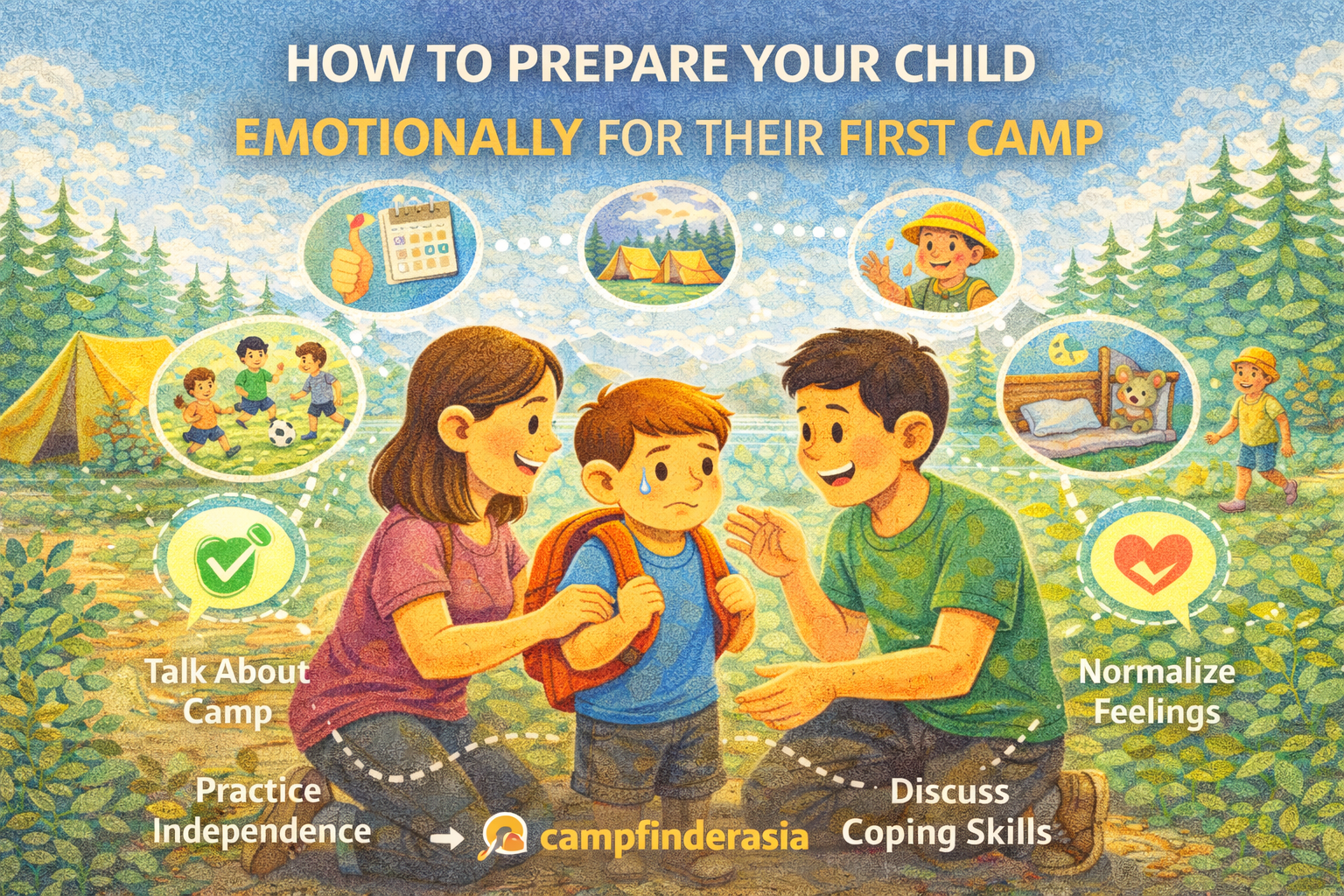
Introduction – The Excitement and the Butterflies
The bags are packed. The camp dates are marked on the calendar. You’ve answered a hundred practical questions—what to wear, what to bring, how long it lasts.
And yet, something else lingers.
A quiet mix of excitement and nervousness.
For your child—and for you.
The first camp experience is a big milestone. For many children, it’s the first time stepping into a new environment without familiar routines or constant parental support. Emotionally, that’s a lot to process.
The good news? Emotional readiness can be gently built.
With the right preparation, first-time campers don’t just cope—they often thrive.
In this guide, we’ll explore how to prepare your child emotionally for their first camp, what to expect along the way, and how to set them up for confidence, resilience, and joy.
Why Emotional Preparation Matters More Than Packing Lists
Most parents focus on logistics.
But emotional readiness often determines whether a camp experience feels:
Empowering or overwhelming
Exciting or anxiety-inducing
Confidence-building or stressful
Children who feel emotionally prepared are more likely to:
Adapt quickly
Try new things
Handle homesickness
Enjoy the experience fully
Emotional preparation isn’t about removing nerves—it’s about giving children tools to manage them.
What Children Often Feel Before Their First Camp
Even confident children experience mixed emotions before their first camp.
Common feelings include:
Excitement about activities
Nervousness about new people
Worry about missing home
Fear of the unknown
These feelings are normal—and important.
Your goal isn’t to eliminate them, but to normalize and support them.
Start With Open, Honest Conversations
Preparation begins with communication.
Talk About Camp Early (But Casually)
Instead of a single “big talk,” weave camp into everyday conversation:
Mention activities casually
Talk about the schedule
Share what camp days might look like
This helps camp feel familiar, not intimidating.
Avoid Overhyping the Experience
It’s tempting to say:
“You’re going to have the best time ever!”
But this can create pressure.
A better approach:
“Some parts will be fun, some might feel hard—and that’s okay.”
This sets realistic expectations and builds emotional safety.
Help Your Child Name Their Feelings
Children don’t always know how to explain what they’re feeling.
You can help by:
Naming emotions (“You seem a bit nervous”)
Asking open-ended questions
Listening without fixing
When children feel understood, anxiety often softens.
Build Emotional Readiness Through Small Independence Steps
Confidence grows through practice.
Before Camp, Try:
Short playdates without parents
Sleepovers with relatives or friends
Letting your child make small decisions independently
These experiences gently build emotional resilience.
Teach Coping Strategies (Without Making Them Scary)
Instead of focusing on “what if something goes wrong,” frame coping tools as skills.
Helpful tools include:
Taking deep breaths
Finding a trusted adult
Joining an activity when feeling unsure
Remembering that feelings pass
Practice these casually, not urgently.
Avoid “Rescue Language”
One of the biggest emotional pitfalls is unintentionally undermining confidence.
Avoid saying:
“If you’re sad, I’ll come get you.”
This can increase anxiety.
Instead say:
“If you feel sad, the camp staff will help you—and we’ll talk after.”
This reinforces trust in both your child and the camp.
Normalize Homesickness Before It Happens
Homesickness is one of the biggest fears parents have—and children pick up on that.
Let your child know:
Missing home is normal
Many kids feel it at first
It usually passes
When children expect homesickness, they’re less scared by it.
Choose the Right First Camp Experience
Not all camps are ideal for first-timers.
Good first camps often:
Have shorter durations
Offer clear routines
Provide strong emotional support
Welcome first-time campers
Parents across Asia often explore first-camp-friendly options using Camp Finder Asia, which makes it easier to compare camps by age group and camp style:
👉 https://campfinderasia.com/
Explain What Camp Staff Are There For
Children sometimes think adults at camp are only there to enforce rules.
Help your child understand that staff:
Help kids make friends
Support children when they feel sad
Answer questions
Keep everyone safe
This makes it easier for children to ask for help when needed.
Practice the Goodbye (Yes, Really)
Goodbyes matter more than many parents realize.
Helpful Goodbye Tips
Keep it calm and confident
Avoid lingering too long
Use reassuring but brief words
A confident goodbye tells your child:
“I believe you can do this.”
Manage Your Own Emotions First
Children are emotional mirrors.
If you’re anxious, they’ll sense it—even if you don’t say a word.
Before camp:
Acknowledge your own worries
Remind yourself why camp is valuable
Trust the preparation you’ve done
Your calm is one of the greatest gifts you can give.
What Happens Emotionally During the First Few Days of Camp
Most first-time campers go through phases:
Excitement
Uncertainty or homesickness
Adjustment
Engagement and enjoyment
This emotional curve is normal.
Understanding it helps parents avoid panicking too early.
Day Camps vs Overnight Camps: Emotional Readiness Differences
Day Camps
Lower emotional intensity
Daily return to home comfort
Ideal for younger or anxious children
Overnight Camps
Bigger emotional leap
Stronger independence gains
Often deeper confidence growth
There’s no “better” choice—only what suits your child right now.
Parents can explore both formats on Camp Finder Asia:
👉 https://campfinderasia.com/
What to Do If Your Child Feels Nervous Right Before Camp
Last-minute nerves are common.
Instead of reassuring endlessly, try:
Redirecting attention
Reviewing coping tools
Reminding them they’ve handled new things before
Confidence grows from remembering past successes.
After Camp: Reflecting Without Pressure
When your child returns:
Let them share at their own pace
Avoid immediately asking “Did you miss us?”
Celebrate effort, not just fun
Even challenging moments are growth moments.
A Real-Life Story – “I Was Scared, But I Did It”
When five-year-old Emma attended her first camp, she cried at drop-off. Staff gently supported her, and by lunchtime she was painting with new friends.
At pickup, Emma said:
“I was scared… but I liked it.”
That simple sentence marked a huge emotional step forward.
How Camp Finder Asia Helps Parents Prepare Confidently
Preparation includes choosing the right environment.
Camp Finder Asia helps parents:
Discover camps suited for first-timers
Compare camp duration and structure
Understand support systems
Feel confident in their choices
Explore first-camp-friendly options here:
👉 https://campfinderasia.com/
FAQs About Preparing for a First Camp
1. What age is best for a first camp?
It depends on emotional readiness, not just age.
2. Should I talk about homesickness beforehand?
Yes—normalizing it reduces fear.
3. What if my child cries at drop-off?
This is common and usually short-lived.
4. How long does adjustment take?
Most children settle within a few days.
5. Can shy children handle first camp?
Yes, especially in supportive, structured environments.
6. Where can I find camps good for first-timers in Asia?
Parents often use Camp Finder Asia:
👉 https://campfinderasia.com/
Conclusion – Emotional Preparation Is the Real Packing List
Preparing your child emotionally for their first camp isn’t about eliminating fear.
It’s about building trust, confidence, and resilience.
When children feel supported—but not rescued—they discover something powerful:
“I can handle new experiences.”
That belief lasts far beyond camp.
With thoughtful preparation and the right camp environment, a first camp experience becomes more than an activity—it becomes a milestone.
Explore camps that support first-time campers across Asia at:
👉 https://campfinderasia.com/