
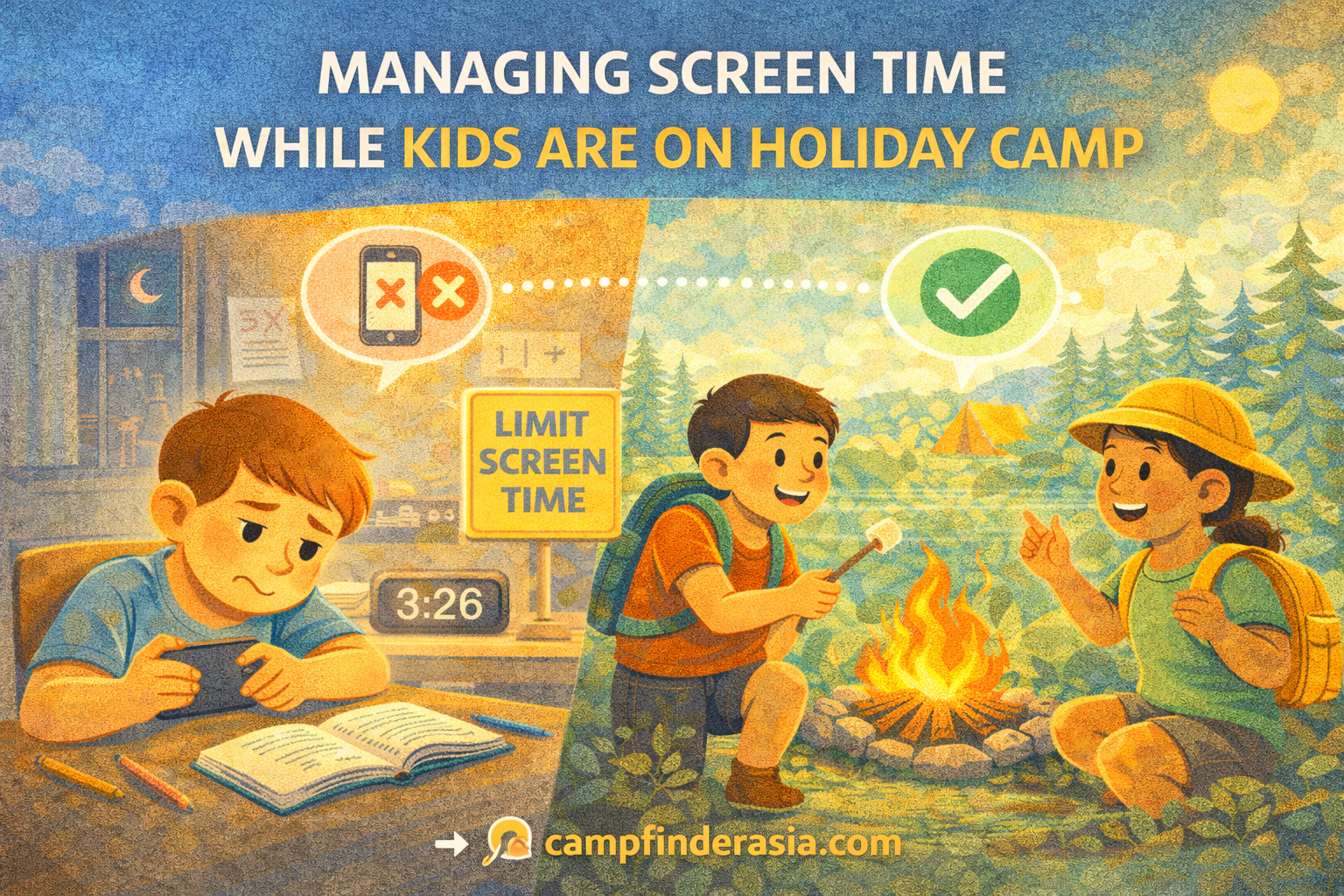
Introduction – “Can I Bring My iPad?”
It’s often one of the first questions kids ask when they hear they’re going to camp.
Not “What activities will we do?”
Not “Who else is going?”
But:
“Can I bring my phone?”
For parents, managing screen time during school holidays already feels like a full-time job. Add holiday camps into the mix, and the questions multiply. Should kids disconnect completely? Is limited screen time okay? Will they struggle without their devices—or thrive?
The truth is, holiday camps can be one of the healthiest resets for screen habits, if managed thoughtfully.
In this article, we’ll explore how to manage screen time while kids are on holiday camp, why camps are uniquely positioned to support healthier digital habits, and how parents can set realistic expectations—without guilt or power struggles.
Why Screen Time Becomes a Bigger Issue During Holidays
During school terms, routines naturally limit screen use. Holidays remove that structure.
Many parents notice:
Increased reliance on screens to fill time
More arguments over device limits
Less physical activity
Reduced face-to-face interaction
Holiday camps often become a turning point—not by banning screens harshly, but by replacing them with something better.
Why Holiday Camps Are Ideal for Screen-Time Balance
Camps don’t just “take away” screens. They offer compelling alternatives.
At camp, children:
Stay physically active
Engage in hands-on learning
Socialize face-to-face
Feel busy, included, and stimulated
When children are genuinely engaged, screen cravings naturally fade.
Parents across Asia explore camps that promote healthy balance through platforms like Camp Finder Asia, which showcases programs with different approaches to screen use:
👉 https://campfinderasia.com/
Do Camps Usually Allow Screens?
The answer varies.
Common Camp Screen Policies
Screen-free camps: No personal devices allowed
Limited-use camps: Devices allowed only at certain times
Emergency-only access: Phones held by staff if needed
The key is clarity. Good camps clearly explain their policy so parents and children know what to expect.
Why Screen-Free Time Is So Powerful at Camp
When screens are removed (or limited), something interesting happens.
Children:
Talk more
Move more
Imagine more
Engage more deeply
Many parents are surprised to hear their child say, “I forgot about my phone.”
That’s not deprivation—that’s healthy engagement.
1. Camps Replace Passive Screen Time With Active Experiences
Screens are often passive. Camps are active.
Instead of watching someone else do something, kids at camp:
Build
Create
Explore
Collaborate
This shift helps children rediscover joy in doing—not just consuming.
2. Social Connection Reduces the Need for Screens
Screens often fill social gaps.
At camp, those gaps disappear.
Children form friendships through:
Shared challenges
Team activities
Group games
Real conversations
When kids feel connected, they’re less likely to seek digital distraction.
3. Camps Help Kids Learn to Self-Regulate Screen Use
Rather than strict bans at home, camps model balance.
Children learn that:
Screens aren’t always necessary
Downtime doesn’t have to mean devices
Boredom can lead to creativity
These lessons often carry back into home life after camp ends.
4. Managing Expectations Before Camp Starts
Preparation matters.
What Parents Can Do Before Camp
Explain the camp’s screen policy clearly
Set expectations early
Frame screen limits as opportunities, not punishments
Acknowledge feelings honestly
Children handle limits better when they’re not surprised.
5. What If My Child Is Anxious Without Their Device?
This is a common concern—and a valid one.
Many children use devices for comfort, especially during transitions.
How Camps Support This
Gradual adjustment periods
Strong staff support
Busy schedules that reduce idle time
Emotional reassurance
Most children adapt faster than parents expect.
6. The Role of Day Camps vs Overnight Camps
Day Camps
Easier transition for screen-dependent kids
Screens still available at home
Daily reassurance
Overnight Camps
Deeper digital detox
Stronger habit reset
Greater independence
Both can support healthy screen habits—just at different levels.
Parents can explore both formats on Camp Finder Asia:
👉 https://campfinderasia.com/
7. Teaching Kids Why Screen Limits Exist
Camps succeed because they don’t just enforce rules—they create meaning.
Children begin to understand that:
Screen breaks help them feel better
Real-world play is more satisfying
Balance matters
This understanding is far more effective than constant policing at home.
8. How Camp Activities Naturally Reduce Screen Cravings
Well-designed camps fill the day with:
Movement
Creativity
Problem-solving
Social interaction
When kids are tired in a good way, screen time becomes less appealing.
9. What Happens After Camp Ends?
One of the biggest benefits of camp is what happens after.
Parents often notice:
Reduced screen dependence
Increased interest in offline activities
Better emotional regulation
More willingness to self-limit
Camp becomes a reference point:
“Remember how much fun you had without screens?”
10. Using Camp as a Reset, Not a Rule
Camps work best as resets—not permanent bans.
Instead of saying:
“No more screens ever.”
Parents can say:
“Let’s find a better balance, like at camp.”
This approach feels achievable and respectful.
11. What to Ask Camps About Screen Time
Before enrolling, parents can ask:
Are devices allowed?
How are screen rules enforced?
How do you support kids who struggle initially?
How do you keep kids engaged without screens?
Transparent answers are a good sign of thoughtful programming.
How Camp Finder Asia Helps Parents Choose the Right Fit
Different families want different levels of digital disconnection.
Camp Finder Asia helps parents:
Discover camps with varying screen policies
Compare day and overnight options
Understand camp philosophies clearly
Choose programs aligned with family values
Explore camp options here:
👉 https://campfinderasia.com/
A Real-Life Story – “I Didn’t Miss My Phone”
When Max went to camp, his parents worried. Screens were his comfort zone.
On the third day, they received a short update:
“He’s busy. He’s happy. He hasn’t asked for his phone.”
When Max came home, he didn’t ask for his tablet right away. He asked to show his parents what he built.
That moment said everything.
Common Parent Concerns About Screen Time and Camp
“Isn’t it unrealistic to limit screens completely?”
Short-term limits help reset habits without long-term harm.
“Will my child fall behind socially?”
Face-to-face interaction often improves social confidence.
“What if my child hates it?”
Most resistance fades once children are engaged.
FAQs About Managing Screen Time at Camp
1. Are screen-free camps too extreme?
Not when balanced with engaging activities and support.
2. Should I remove screens at home after camp?
Gradual adjustment works better than sudden bans.
3. Are screens ever useful at camp?
Some camps use limited tech for learning—but intentionally.
4. What age benefits most from screen breaks?
Children of all ages benefit, especially during holidays.
5. How long does it take to see changes?
Often within days of reduced screen use.
6. Where can I find camps with clear screen policies?
Parents often use Camp Finder Asia:
👉 https://campfinderasia.com/
Conclusion – It’s Not About Removing Screens, It’s About Rebalancing Life
Managing screen time doesn’t have to feel like a constant battle.
Holiday camps offer children something screens can’t: connection, confidence, and real-world joy. By stepping away from devices—even temporarily—kids rediscover how good it feels to be present, active, and engaged.
For parents, camps aren’t just childcare solutions. They’re opportunities to reset habits, rebuild balance, and remind children that the world beyond the screen is still exciting.
Explore holiday camps that support healthy screen habits across Asia at:
👉 https://campfinderasia.com/